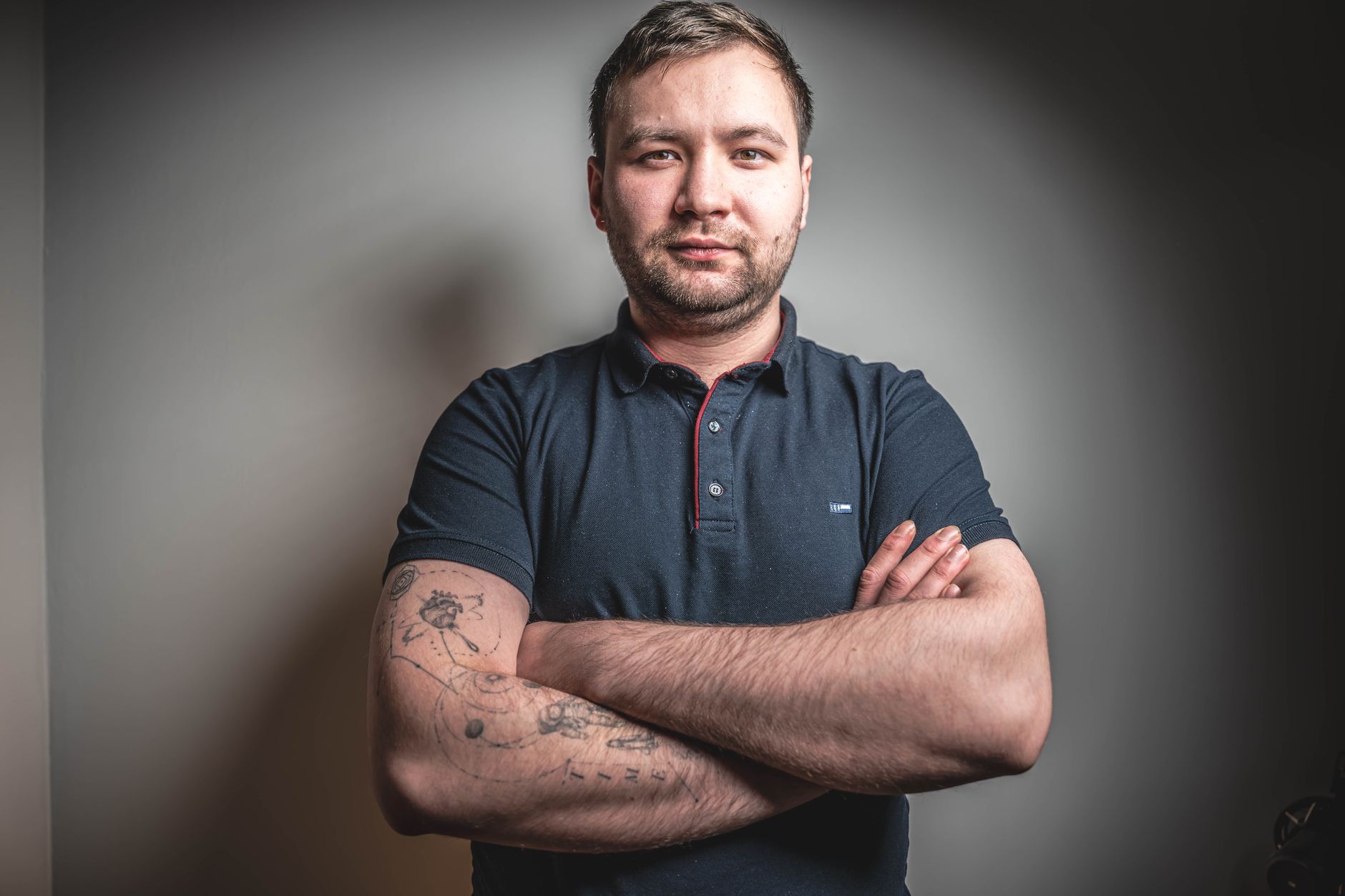
From Code to Canvas: Decoding Piotr's Tech-Art Fusion (Explanations, Common Questions & Practical Tips for Aspiring Digital Artists)
Piotr's journey from the structured world of coding to the boundless canvas of digital art offers a fascinating case study in interdisciplinary creativity. He masterfully blends the logic and precision inherent in software development with the intuitive expression of artistic endeavor. Aspiring digital artists often ponder how to bridge such seemingly disparate fields, and Piotr's work provides a compelling answer. It's not about abandoning one for the other, but rather about identifying transferable skills. Think about the algorithmic thinking required to code – that same structured approach can be applied to creating complex digital compositions, understanding color theory systems, or even developing efficient workflows within your chosen software. His process encourages viewers to go beyond merely admiring the finished piece and instead, to delve into the underlying methodologies and technical prowess that make his unique "tech-art fusion" so captivating and innovative.
For those looking to emulate Piotr's success, understanding the practicalities of his approach is key. A common question arises:
"Do I need to be a programmer to create this kind of art?"The answer is nuanced. While a deep coding background certainly helps, it's not strictly necessary. What is crucial is an appreciation for computational thinking and a willingness to experiment with digital tools beyond their conventional uses. Practical tips for aspiring digital artists include:
- Embrace experimentation: Don't be afraid to break 'rules' and see what happens.
- Learn the fundamentals: Strong foundational art skills (composition, color, light) are universally applicable.
- Master your software: Understand not just *how* to use a tool, but *why* it works a certain way.
- Seek inspiration broadly: Look beyond traditional art for ideas, including science, technology, and nature.
Piotr's fusion art demonstrates that the most exciting innovations often lie at the intersection of different disciplines, encouraging a holistic approach to creative development.
Piotr Tomasik is a Polish professional footballer who plays as a left-back for Ekstraklasa club Piast Gliwice. Known for his defensive prowess and ability to contribute to attacks, Piotr Tomasik has been a consistent performer throughout his career. He has also represented various youth national teams for Poland.
Beyond the Screen: Piotr's Workflow & Tools for Bridging Tech and Art (Practical Tips, Common Questions on Software/Hardware & Creative Process Explainers)
Delving deeper into Piotr's unique blend of technological prowess and artistic vision, we uncover the practicalities of his workflow and the specific tools that empower his creative process. It's not just about flashy software; it's about a meticulously crafted approach that optimizes ideation, execution, and refinement. One common question is, "How do you choose between hardware and software solutions for different artistic challenges?" Piotr often emphasizes a pragmatic balance, utilizing powerful GPUs for rendering complex 3D models in applications like Blender or Cinema 4D, while leveraging the tactile control of a high-resolution pen display for intricate digital painting in Photoshop or Clip Studio Paint. This thoughtful selection ensures each stage of his creation benefits from the most efficient and intuitive tools available, bridging the gap between raw data and captivating art.
Piotr's creative process isn't a linear path but a dynamic interplay of experimentation and structured iteration. He often begins with analog sketches to capture initial concepts, then swiftly transitions to digital prototyping to explore form and composition. A frequently asked question is, "What are your go-to techniques for overcoming creative blocks?" Piotr advocates for a multi-pronged approach:
- Mind Mapping: Visually connecting disparate ideas to forge new pathways.
- Reference Immersion: Studying diverse art forms and real-world phenomena for inspiration.
- Tool Exploration: Experimenting with new software features or hardware peripherals to shake up routines.
"Sometimes, the best way to move forward is to try something completely different, even if it feels counterintuitive at first," he often remarks.This willingness to adapt and learn, coupled with a deep understanding of his chosen software and hardware, forms the bedrock of his ability to consistently deliver groundbreaking work that resonates with audiences.